Why Search Intent Is Reshaping Modern SEO Strategies
Search intent is changing modern SEO strategies because Google now ranks pages based on how well they match what users want. If your content fails to meet that expectation, it will struggle to reach page one even with strong SEO basics.
Search engines have moved well past matching keywords to pages. Instead, Google now checks whether a page fully answers the intent behind a query.
This article explores how search intent influences rankings, keyword research, and content decisions. It also breaks down the four intent types and how Google reads each one.
By the end, you’ll have a clear plan for aligning your SEO strategy with what users search for.
What Is Search Intent, and Why Do Rankings Depend on It?
Search intent is the reason behind a query, and search engines prioritise pages that satisfy it. When a page misses that intent, rankings often suffer regardless of how well it’s written.
Take two searches: “running shoes” and “best running shoes under $150.” While the first is broad, the second signals a buyer with a specific budget. One page can’t satisfy both. That’s why search intent plays such a big role in determining which pages appear in the search results.
And there’s no way around this. Websites that match search intent rank better and convert more of the traffic they attract.
What Are the 4 Types of Search Intent?
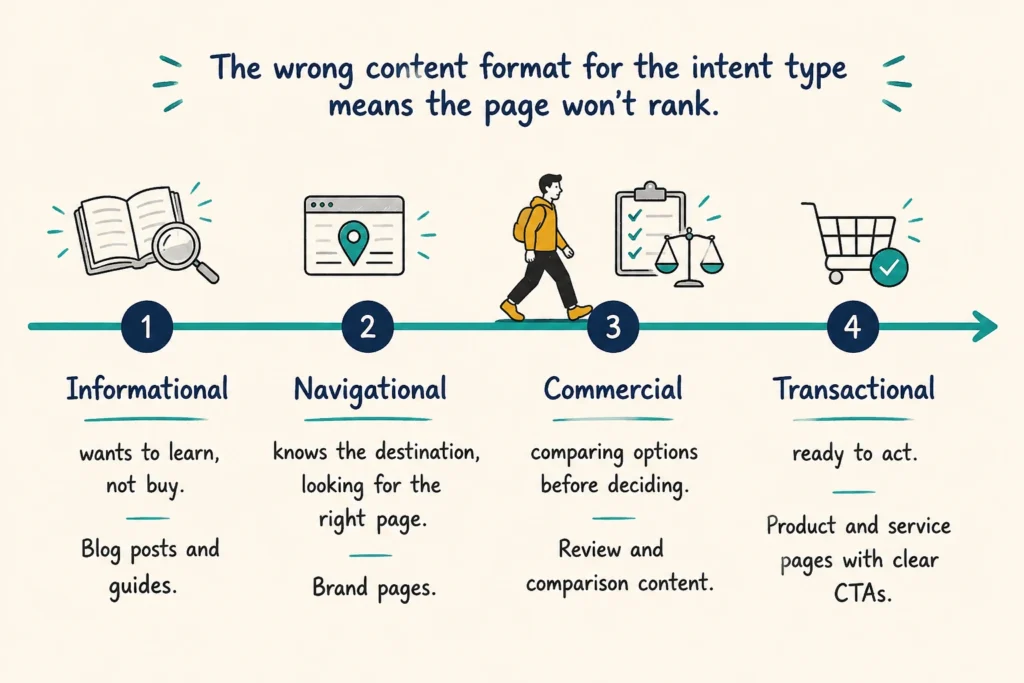
The four types of user goals are informational, navigational, commercial, and transactional. Each intent type requires a different content approach. The wrong choice means your page won’t match what Google wants to show for that query.
Let’s take a closer look at each intent type in practice:
Informational Intent: When People Just Want Answers
Informational intent covers queries where users want to learn something. Search engines look for content that answers the question directly, without a product push. Blog posts, explainer articles, and how-to guides perform best here. To match informational intent, structure your content like this:
- Answer the Question First: Open with the clearest answer, then build context around it. Google rewards pages that don’t make users scroll to find the point.
- Readers Aren’t Buyers: Readers are in learning mode, so focus on explaining the topic clearly instead of pushing a product or service.
- Short Paragraphs Win: Well-structured content with direct answers helps users find information quickly. It also makes it easier for search engines to understand the key points on your page. That way, your chances of appearing in featured snippets improve, which can place your content at the top of search results.
Informational content earns steady organic search traffic over time, particularly when the content covers enough detail to satisfy follow-up questions.
From there, the focus shifts to the other three intent types that sit closer to a purchase decision.
Navigational, Transactional, and Commercial Intent
Navigational intent is often the easiest to identify. A user already knows the website they want and types a brand name to get there faster. The goal is to find the correct page, so brand authority and page relevance play the biggest role.
Transactional intent works differently. Instead of looking for a specific website, users have a clear goal to complete an action. They’re searching to buy, sign up, or book something specific. Product pages with strong calls to action and visible trust signals perform well here.
Commercial intent sits between the two. Users aren’t ready to buy yet, but they’re closer to it than someone just browsing, and they haven’t picked a brand yet either. They compare options before choosing, so comparison content and review articles rank well.
How Does Google Search Decide Which Pages to Rank?
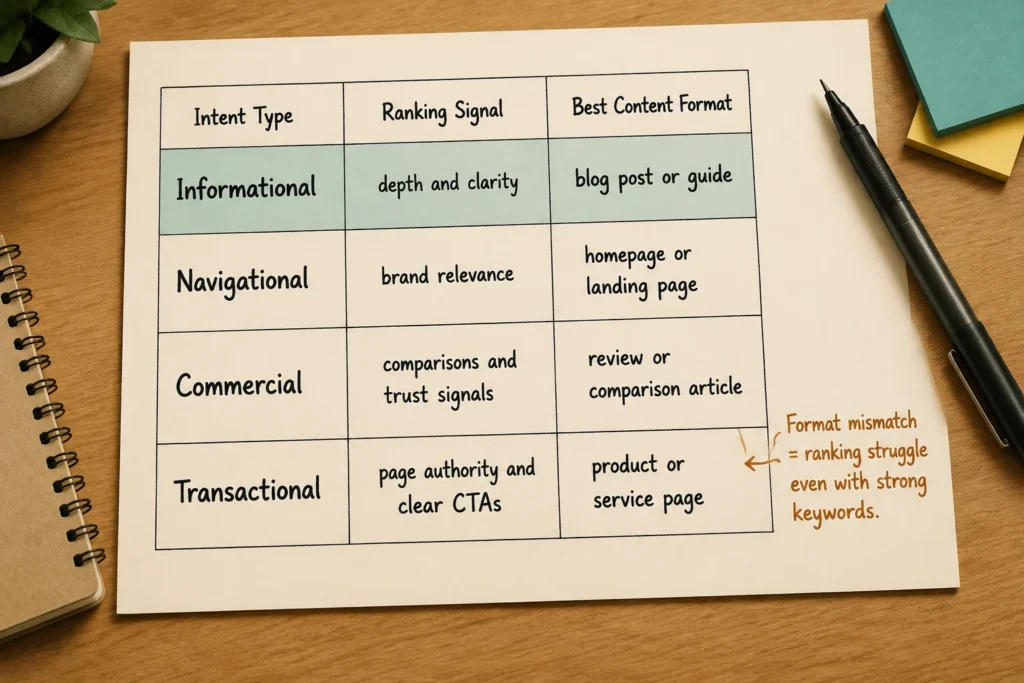
Google ranks sites by comparing each query against the formats and signals that perform well for that search. The algorithm also tracks which content type users find most useful for a given intent.
The table below maps each intent type to the signals Google weighs and the content format it favors:
| Intent Type | Ranking Signal | Best Content Format |
| Informational | Depth, clarity, structure | Blog post, guide |
| Navigational | Brand relevance, authority | Homepage, landing page |
| Commercial | Comparisons, trust signals | Review, comparison Site |
| Transactional | Page authority, product detail, clear CTAs | Product page, service page |
Each row reflects a documented pattern in Google’s ranking behaviour. This aligns with Google’s guidance that creating helpful, relevant content is essential for appearing in search results.
Across campaigns we have run, websites that matched format and intent held rankings through algorithm updates. Those that only targeted the right keyword rarely did.
Now, let’s look at where keyword research fits into this.
Does Your Keyword Research Reflect What People Want?
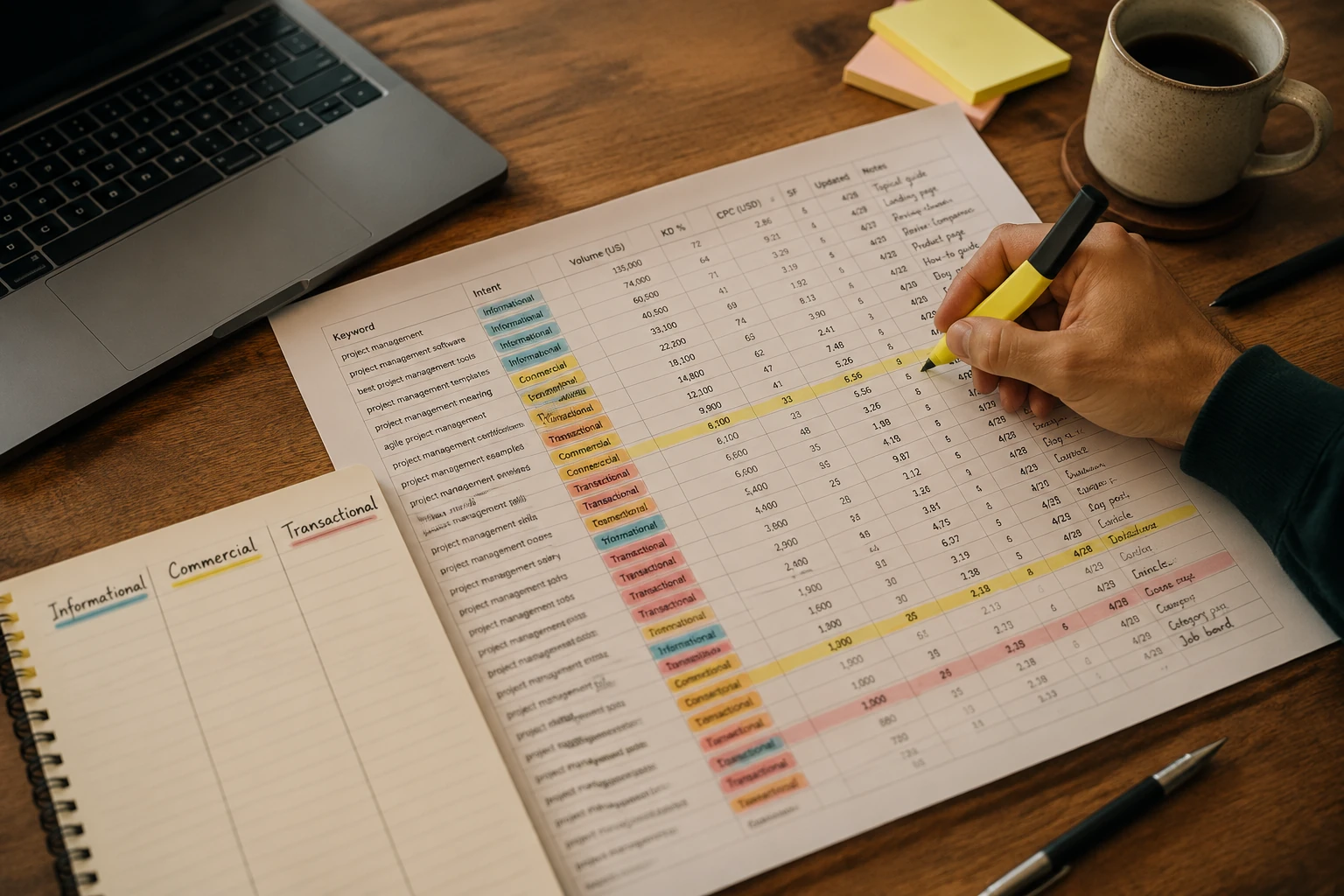
Volume tells you how often people search, but intent reveals why they search. Keyword research only reflects what people want when it considers both. Without that context, a high-volume keyword can attract the wrong audience and hurt engagement and conversions. These three angles will change how you approach keyword research:
- Intent Sits Behind Every Query: The top-ranking pages for a keyword reveal its likely intent. A results page filled with blog posts usually signals informational intent, while product pages point towards transactional intent. This pattern helps you understand what format your content needs to follow.
- Same Topic, Different Intent: Two keywords can cover the same topic but attract users at different stages of the decision process. For example, “Accountant Brisbane” signals someone ready to hire, while “How to find a good accountant” signals someone still researching. Both keywords may appear in the same list, but they need completely different webpages.
- Stronger Coverage With Secondary Terms: Across any topic, secondary keywords surface the subtopics your audience searches alongside the main term. As a result, your page gets broader reach without a loss of focus.
The intent behind a keyword tells you what to build before you write a single word.
How Do You Optimize Content for Intent and Organic Traffic?
Content optimized for intent matches page structure, depth, and topic coverage to what Google rewards for that query type. Two details usually decide whether that match holds: how well a page uses related keywords and alt text, and how AI tools get used in the process. Let’s explore them in more detail.
1. Related Keywords and Descriptive Alt Text: Do They Help?
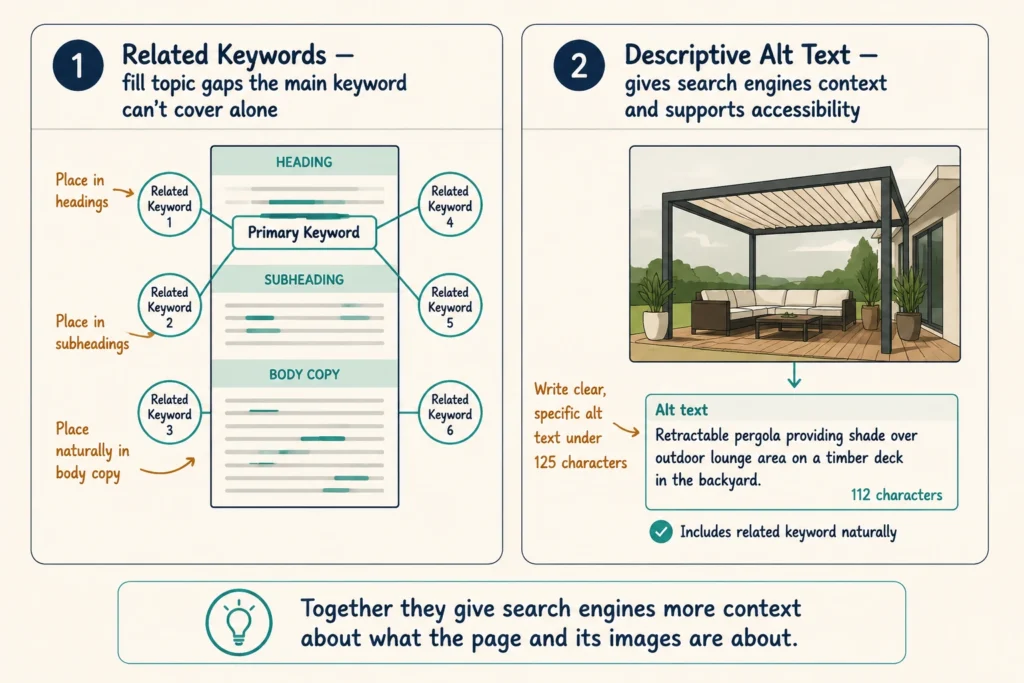
Google needs more than your focus term to understand a page. Related keywords supply that context. They fill in the topic gaps your main keyword can’t cover alone. Consistent use across a page strengthens content optimization without keyword stuffing.
Meanwhile, descriptive alt text works on two levels. Screen readers rely on it to describe images to users with visual impairments. On top of that, search engines read it as a contextual signal that reinforces your page topic.
Here is what good practice looks like across both:
- Add Alt Text to Every Image: Write a short, specific description of what the image shows. Keep it under 125 characters and include a related keyword where it fits naturally.
- Deliberate Placement Pays Off: Related keywords work best spread across headings, subheadings, and body copy. Forced clustering in one spot weakens the signal.
- Both Together Strengthen Rankings: Accurate alt text and well-distributed related keywords help pages appear in both organic search and image search results. Together, they give search engines more context about what the page and its images are about.
After we review underperforming pages, missing alt text and thin related keyword coverage appear as two of the most common gaps.
2. How Do AI Tools Fit Into Content Optimization?
AI-powered SEO tools identify keyword gaps, flag missing subtopics, and show where a page falls short in organic search rankings. They surface the structure and depth Google already rewards for a specific query type.
Generative AI tools serve a separate purpose. They assist with drafting and refining content briefs from an AI prompt.
But here is the thing. The insights these tools surface are only as useful as the human decisions behind them. After all, voice, angle, and depth still need someone who understands the audience engaged through links, social media posts, or ads.
For the most part, pages that get both details right earn stronger organic traffic and hold their ranking longer.
How Do You Create Content That Builds Trust Over Time?
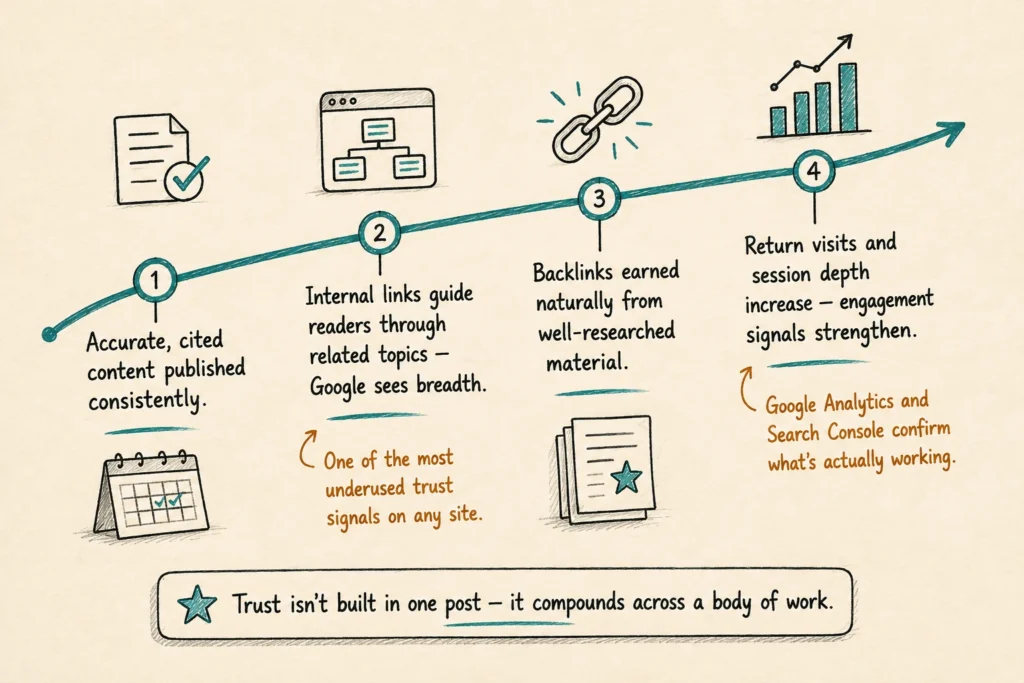
Information builds trust through consistent accuracy, clear authorship, cited sources, and internal links. It grows across a body of work that search engines and readers find reliable every time.
Internal links are one of the most underused trust signals in content marketing (and one of the easiest wins on any site). They guide readers through the customer journey without pushing them toward a decision. A well-linked site tells Google your material covers a topic with enough breadth to be worth following.
That said, sites that publish well-researched, consistently cited material attract backlinks and return visits naturally. To see whether that’s actually happening, Google Analytics tracks engagement metrics like session duration and scroll depth. Alongside it, Google Search Console reveals which queries bring users to your site, so your SEO efforts stay pointed at what’s working across your web presence.
Put Your SEO Strategy to Work, Starting Today
Search intent is the filter Google runs every query through, and your information either passes or it doesn’t. Pages that match what the searcher wants earn their spot. Simply put, your SEO strategy needs to start there.
An intent-led approach gives your organic search traffic a reliable base. The right intent type helps a page earn solid rankings, pull in backlinks naturally, and reach the users already searching for what you offer.
If your content isn’t getting the traction it deserves, Studio Paralelo can help. We work with businesses across Australia to align SEO strategy with what their audience searches for.
Contact us today, and we’ll take a look at where your site stands.