
The Hidden Ranking Barriers That Most Businesses Ignore
Most businesses spend months refining their content, building backlinks, and optimizing page speed, yet their rankings are stuck on page five. The problem often isn’t what they’re doing (or not doing enough of), but what they’ve completely overlooked.
Gradually, search engines have evolved far beyond simple keyword matching and link counting. Today’s algorithms evaluate dozens of signals that most SEO guides never mention, and many businesses unknowingly trigger these hidden barriers without realizing it.
This article reveals those overlooked ranking factors that are holding your business back and shows you how to identify and fix them. Keep reading to discover what might be blocking your site from the visibility it deserves.
Technical Foundation Problems That Search Engines Can’t Overlook
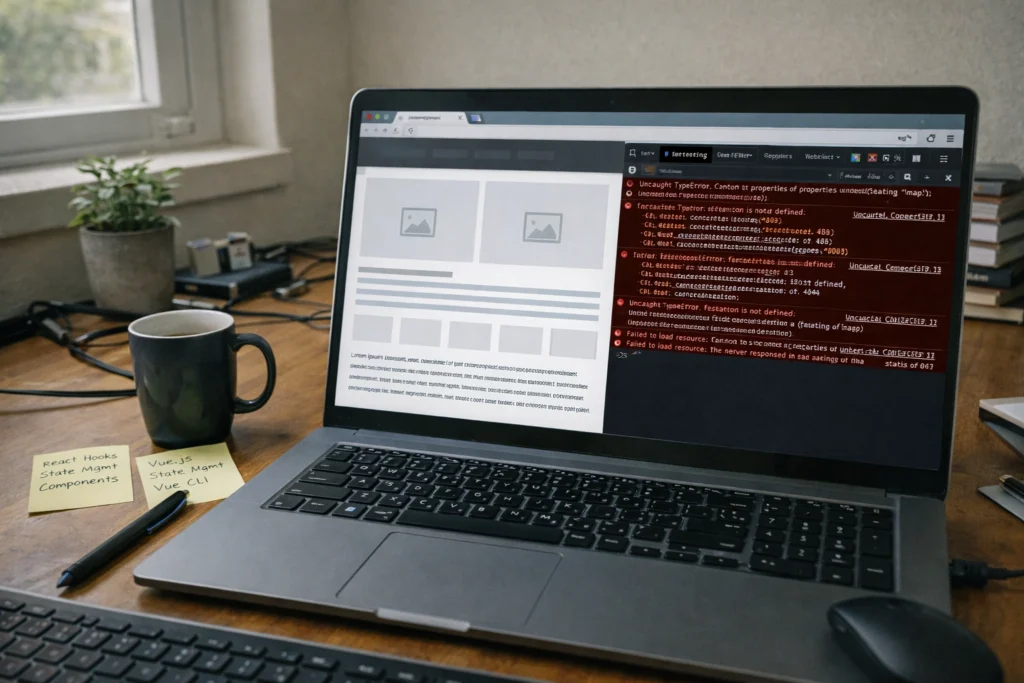
Technical barriers represent the most overlooked ranking obstacles that hide invisibly beneath the surface. This way, they block search engines from properly accessing and understanding your content long before quality or keywords ever get a chance to play.
Among a lot of problems, these two technical problems stand out the most to completely drop your rankings:
- Crawl Budget Mismanagement: Search engines allocate a finite amount of time and resources to crawl each website. So, if you’re wasting that budget on duplicate pages, parameter variations, or low-value URLs, Google might never reach your most important content. Generally, sites with thousands of pages often trap crawlers in endless loops of pagination or filtered product views.
- JavaScript Rendering Failures: Modern frameworks like React and Vue.js can create interactive user experiences, but they often generate content that search engines can’t process easily. That means, when your content loads through client-side JavaScript, crawlers may see an empty page or incomplete information.
Bottom line: These problems often go unnoticed since human visitors can’t see them. Your site looks perfect in a browser, loads quickly, and delivers exactly what users need. Yet search engines encounter an entirely different (and often broken) version of the same pages due to this issue.
The Mobile Experience Gap Nobody Talks About
Have you ever wondered why your desktop rankings look strong, but mobile traffic remains surprisingly low? From what we’ve seen across hundreds of site audits, the answer usually lies in mobile experience issues that desktop testing completely misses.
Research shows that 63% of all organic search visits now come from mobile devices. Even so, mobile conversions are still lagging behind desktop by an average of 30-40%, with a poor mobile experience.
This gap creates a silent revenue loss that compounds daily by:
- Blocking actual interactions
- Forcing horizontal scrolling with frustration
- Driving visitors away immediately
- Requiring constant zoom adjustments
That’s how the problem extends beyond what responsive design frameworks promise to solve automatically. Plus, your site may pass Google’s mobile-friendly test while still delivering an experience that frustrates real users enough to abandon before converting.
On top of that, search engines now factor those behavioral signals directly into mobile rankings through engagement metrics.
Content Depth Versus Content Length Confusion
Content depth means thoroughly covering a topic and answering related questions that users actually have. Meanwhile, content length just measures how many words appear on the page (and those two things aren’t the same at all).
You can see this difference with a simple example. An 800-word article that directly answers user intent and offers practical examples will consistently outrank a 3,000-word piece filled with fluff and repetition.
Let’s be honest here, we’ve all seen those bloated articles that say nothing useful. They repeat the same points in slightly different words, add unnecessary background, and pad sections with generic advice just to hit some arbitrary word count target (usually because someone misunderstood “long-form content” as a ranking factor).
Remember: When someone searches “how to fix crawl budget issues,” they want specific technical steps, not 2,000 words of SEO history followed by vague suggestions to “optimize your site.” That’s why, concentrate on your content depth because it signals you’ve satisfied user intent completely.
Internal Linking Structures That Work Against You
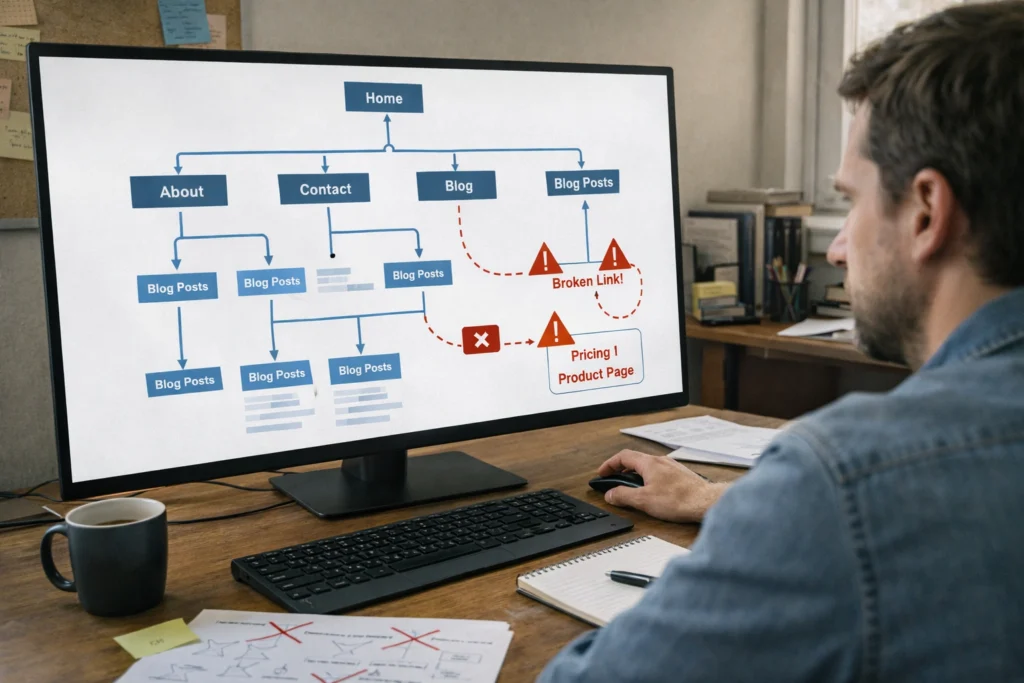
Restructuring your internal links is one of the most cost-effective ways to increase rankings across your entire site.
However, most businesses focus on building external backlinks while ignoring how poorly their internal link structure is. They never realize that this serious bottleneck even prevents search engines from understanding which pages to rank.
The biggest internal linking mistakes usually fall into three categories. Let’s have a look at them:
Orphaned Pages and Link Equity Distribution
Generally, orphaned pages have no internal links pointing to them. That’s why it is nearly impossible for search engines and users to discover them organically. Because of that, these pages also waste potential link equity.
From what we’ve seen in hundreds of site audits, this is where most people go wrong (they create great content but never actually link to it from anywhere).
And its outcome? Well, your pages sit in your sitemap, generating zero traffic and zero rankings despite containing valuable content.
Broken Link Flow to Conversion Pages
Many sites link between informational pages but fail to direct authority toward pages that actually convert, like service or product pages.
You’ll find detailed blog posts that internally link to dozens of related articles, while your pricing or product pages receive almost no internal links at all.
This way, when link paths don’t guide users or crawlers toward priority pages, rankings stall right where revenue is generated. Even if pages are technically linked, poor structure can prevent authority from flowing to the pages that need it most.
Over-Linking That Dilutes Authority
Sometimes, excessive internal links on a single page spread link equity too thin, which reduces the impact of each link (similar to how adding more lanes to a highway doesn’t help if traffic splits equally across all of them).
This action doesn’t strengthen your priority pages. Instead, your authority gets weak across dozens of low-value links that lead nowhere important.
Quick tip: Focus on effective internal linking. It distributes authority through intentional pathways rather than scattering it randomly across every possible connection your CMS allows you to create.
User Engagement Signals Search Engines Actually Monitor
Search engines have evolved beyond simple keyword matching. Now, they measure how users actually interact with your content after clicking. With these behavioral patterns, they also determine whether your page truly satisfies the search intent behind each query.
Here’s what algorithms now track to analyze post-click behaviors:
- Pogo-Sticking Patterns: This happens when users click your result, immediately return to search results, and then click a competitor’s link instead. Unlike a simple bounce, pogo-sticking tells search engines that users actively preferred another result over yours, which directly impacts how algorithms evaluate your content’s relevance.
- Behavior Patterns that Reveal Satisfaction: To track behavior patterns, time on page, scroll depth, and interaction signals combine to show whether visitors found what they needed. However, these metrics are still less impactful than the pogo-sticking pattern.
Verdict: Search engines don’t just count clicks anymore. So, rankings increasingly depend on how long visitors stay engaged with your content versus how quickly they leave.
The Schema Markup Advantage Most Sites Miss
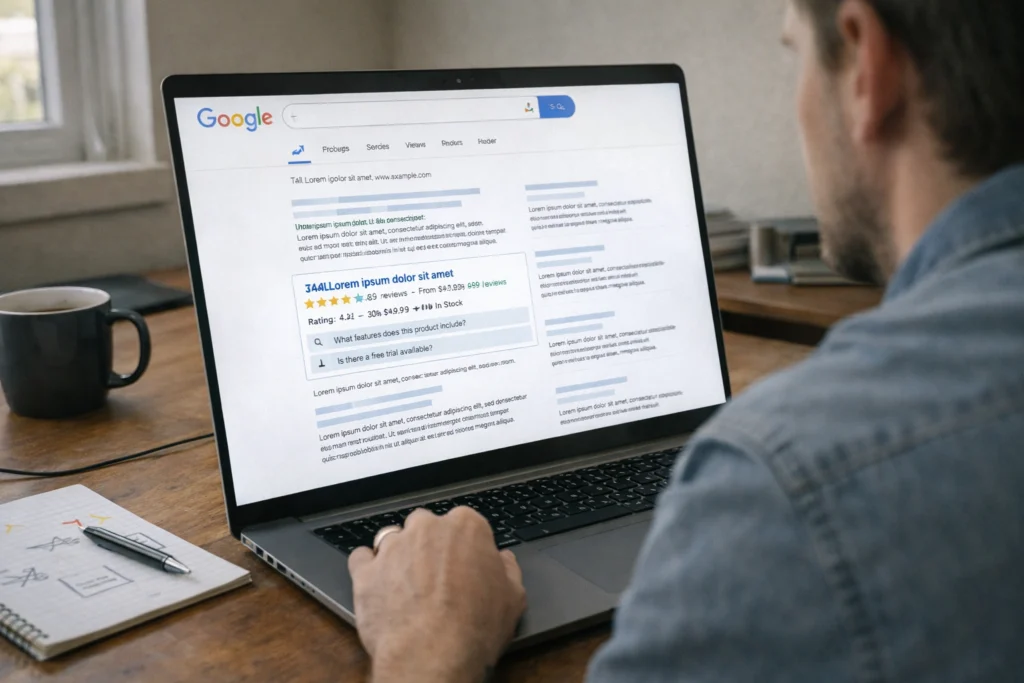
Schema markup helps search engines understand what your content represents. This clarity enables rich results like star ratings, FAQs, and product details to appear directly in search listings.
When you add structured data to your service pages, Google can display prices, availability, and reviews automatically. Trust us! This technique actually increases your click-through rates since your listing takes up more visual space and provides instant answers.
We’ve seen a local bakery add recipe schema to their product pages. Within three weeks, they saw a 47% increase in organic clicks. It didn’t happen because their rankings changed, but their search listings suddenly displayed prep time, calorie counts, and star ratings that competitors’ plain text results couldn’t match.
Fixing the Barriers That Limit Growth
Fixing the hidden barriers we talked about earlier takes some time. But the payoff in rankings and traffic will exceed the effort required to address them properly.
Start by auditing your site for technical foundation problems. Especially, mobile experience gaps and internal linking structures that quietly undermine your visibility every single day.
Ready to uncover what’s holding your rankings back? Studio Paralelo specializes in diagnosing and fixing overlooked SEO issues that most agencies miss completely.