Why Customer Journey SEO Will Dominate in 2026
Customer journey SEO means aligning your content with the exact stages people go through before buying. You might have seen marketers and SEO professionals discussing how this approach will dominate in 2026, completely changing how we think about search visibility and content mapping.
But how does this beat traditional keyword stuffing? And why are search engines suddenly rewarding this method? The core reason is simple. AI search tools and other search engines now prioritise content that matches real user behavior at each customer journey stage, not just pages loaded with target keywords.
Eager to learn how this affects your rankings and conversions in 2026? Keep reading until the end, and we’ll show you exactly how to map content strategy to your customer journey map for better SEO success.
What Is Customer Journey SEO, And Why Now?
Customer journey SEO is the practice of creating content that matches each stage of your buyer’s journey, from the moment they realise a problem exists to the point where they’re ready to buy. Instead of ranking for one keyword, you’re building a complete content roadmap.
For example, someone searching “why is my website slow” needs different content than someone searching “best website speed optimization tools” or “hire website performance expert.”

Let’s break down what makes this approach different from what you’re probably doing right now.
How customer journey SEO differs from traditional keyword targeting
Traditional SEO targets single keywords while customer journey SEO maps content to actual buying stages. Think about it this way. You’re building content that answers the questions people ask at different decision points, not just stuffing pages with search queries.
Instead of hoping one piece ranks and converts, you’re creating multiple touchpoints. People don’t convert after one search. They need several interactions across the customer journey before they trust you enough to hand over their money.
The AI search factor is pushing this change
AI search tools like ChatGPT and Google’s SGE reward content that genuinely answers user intent at each stage. Let us clear things up with an easier example. Suppose someone asks, “What is content mapping?” at the awareness stage. AI systems will surface your educational blog post.
But when that same person later searches “content mapping template download,” AI search expects you to have a decision-stage resource ready.
Search engines now look beyond keyword density and backlinks alone. If your pages lack helpful content for a specific stage, AI overviews and search results will skip right past you and show competitors instead. That’s pretty harsh, but it’s how the game works now.
Mapping Content To Decision Stages
The best part about mapping content to decision stages is that you stop wasting effort on content nobody needs. You’ll know exactly which buyer’s journey stage each piece serves and where your gaps are.
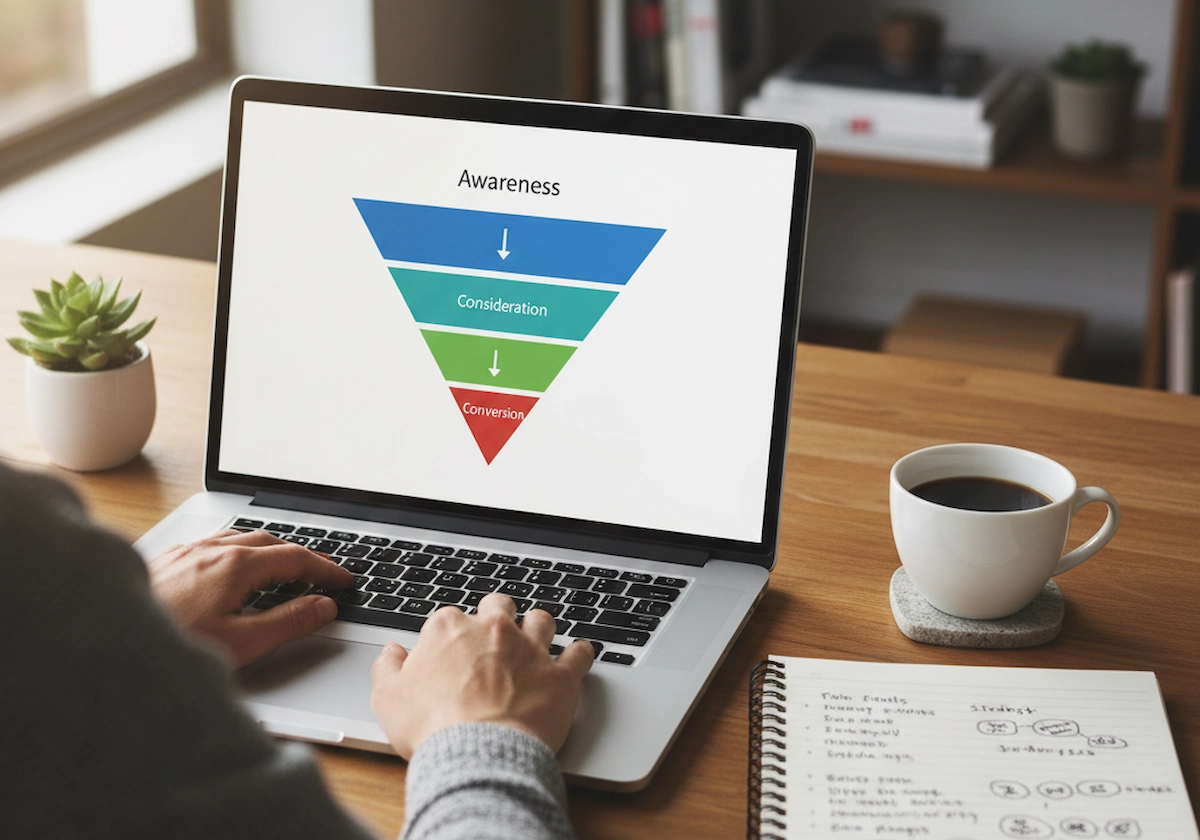
Awareness stage: catching early interest
People at this stage are identifying problems but don’t know solutions exist yet (it’s more common than you think). The thing here is your content should educate without pushing products. To do that well, build trust through helpful information first.
Blog posts and guides work best here for introducing concepts naturally. Someone searching informational queries like “why do websites load slowly” or “common website performance issues” needs awareness stage content that explains the problem without immediately selling your services.
Consideration stage: helping comparisons
Searchers now understand their problem and actively compare different solutions or approaches available. So this is where comparison articles and case studies come in handy. They show how your approach differs from alternatives, honestly.
Answer the “why this instead of that” questions people actually search for. At this customer journey stage, they’re evaluating options like “CDN vs server upgrade” or “DIY website optimization vs hiring experts.” Your content mapping should address these specific search queries because that’s exactly what moves prospects closer to a decision.
Decision stage: closing the gap
Prospects are ready to choose but need final reassurance or specific details. Product pages, pricing guides, and testimonials work really well here because they remove those last objections blocking the purchase.
When push comes to shove, people just want clear direction. They’re running transactional searches like “website optimization services pricing” or “book speed audit consultation.” This is your moment to create content that makes buying from you feel like the natural next step, not a risky leap into the unknown at this buying stage.
Building Your Content Mapping Template
What if you could see exactly which content pieces are missing from your customer journey right now? Here’s what’s interesting. In our experience with hundreds of content audits, most brands have tons of existing content but zero organization around the buyer’s journey stages.

Start by listing every question your customers ask from first awareness to final purchase. Write down the actual search queries people type, the pain points they mention in sales calls, and the objections that come up repeatedly. This research gives you a clear understanding of what content you actually need to create.
Next, match each question to a customer journey stage. Then assign your existing content to those stages or mark the gaps where you have nothing. Your content mapping template shows which stages lack content, so you can prioritize creation efforts properly.
Many brands fall into common SEO myths about what content actually ranks and converts. They think more content always equals better results. But the content mapping process reveals something different. You need the right content at the right customer journey map touchpoints, not just volume.
A visual representation helps tremendously here. Many content mapping tools exist, from simple spreadsheets to fancy software. Pick whatever works for your marketing strategy and business goals. The key stages should be clearly labeled with content ideas assigned to each one.
Buyer Persona Meets Content Strategy
Your buyer persona tells you who you’re talking to, while content strategy decides what you say at each customer journey stage. Getting these two on the same page separates content that converts from content that just sits there collecting dust.
Since you now understand the customer journey stages, let’s show you how buyer personas fit into your content mapping.
- Different personas, different speeds: Not everyone moves through the buyer’s journey at the same pace. A small business owner researching marketing automation has completely different pain points than an enterprise CMO looking at the same solution. One might spend three weeks reading comparison content, while the other books a demo after one case study. Which approach wins you more clients? The answer depends entirely on who you’re targeting.
- Map questions to stages for each persona: Each target audience asks unique questions at every stage. Your budget-conscious persona wants “free alternatives” content at the consideration stage, while your enterprise persona needs “security compliance” content at that same point. This dual-layer approach ensures your content speaks directly to what people actually care about.
- Generic content kills conversions: Without persona insight, your content mapping stays surface-level (something most people overlook until it’s too late). For example, writing “benefits of marketing automation” works for everyone but connects with no one specifically. Our observations show that personalized content performs 3x better because it addresses real concerns that specific people have.
- Track persona-specific patterns: Your analytics will reveal how different personas behave. One persona might binge-read five awareness stage articles in one session, but another skips straight to product pages instead. These patterns tell you where to focus your content creation efforts for each group.
In our work with client content strategy, we’ve seen conversion rates jump by 40% when brands stop treating all visitors the same. The extra effort of mapping content to specific personas pays off fast.
Content Creation Efforts That Actually Match Behaviour
Most brands create content based on guesses instead of watching what people actually do on their site.
Well, our opinion here is you shouldn’t waste time on assumptions. You can spend months building content for the awareness stage only to discover your target audience arrives already knowing their problem and jumps straight to the consideration stage in their customer journey.
How do you track what works at each stage?
Start by measuring the actual movement between customer journey stages in your content mapping. Here’s what to track:
- Page flow from awareness to consideration
- Bounce rates at each decision point
- Time spent on stage-specific content
Our tests revealed something interesting about these metrics. Google Analytics shows which content pieces move people from awareness to consideration successfully through your buyer’s journey. Look at page sequences to see how visitors flow between different journey stages and interact with your existing content.
High bounce rates at the decision stage content mean your consideration stage content needs strengthening (this happens more often than you think). When people land on product pages but leave immediately, they probably need more comparison content first. User satisfaction drops when the content creation efforts don’t match where people actually are in their customer journey map.
Adjusting based on real patterns
This is where most people go wrong with their content mapping process. Real user data reveals where your content mapping assumptions were incorrect from the start. If people skip your awareness stage content entirely, they’re arriving further along in the buyer’s journey than you expected.

Our suggestion here is to update your content strategy quarterly based on actual user behavior patterns you observe through your marketing strategy. Maybe your existing content performs well at awareness but tanks at consideration.
Or perhaps AI search and other search engines send different traffic patterns than traditional search results do. Your mapping content approach should flex based on what the data tells you, not what you hoped would happen with your content marketing efforts.
Start Aligning Your Content Marketing Today
The fastest way to improve conversions is by fixing the customer journey stage where most prospects currently disappear. Look, you’ve read this far, so you already know traditional SEO isn’t cutting it anymore.
So, where do you actually begin? Start by auditing your existing content and tagging each piece by journey stage coverage. Find the biggest gaps where prospects drop off and fix those first. Maybe you’ve got tons of awareness stage content, but nothing helping people at the consideration stage (and yes, that’s leaving money on the table).
Once you’ve spotted the weak points, create one new piece of content for your weakest stage this month and track results through your content marketing strategy. Your content mapping template will reveal exactly where to focus your marketing efforts for the biggest bang for your buck. Think of it like fixing the leakiest bucket first instead of adding more water.
Now, if mapping your entire customer journey feels overwhelming or you’d rather spend time running your business, get in touch with Studio Paralelo. We’ll help you build a content strategy that actually matches how your target audience moves through their buyer’s journey.