
How Trust Building Shapes Modern SEO Success
Building trust with search engines directly improves your rankings and increases organic traffic. Over time, it also helps users see your site as a reliable source for information. That trust is what makes your SEO efforts effective.
And the impact on rankings is evident. You’ll notice trusted sites get crawled faster, indexed sooner, and rank higher for competitive keywords. This usually comes from consistent quality and reputable backlinks.
In this article, we will explore how trust-building efforts lead to visible SEO results. We will also share proven strategies to position your site as a trusted authority in your niche.
But first, we’ll look at how user experience affects search engine trust.
The Connection Between User Experience and Search Engine Trust
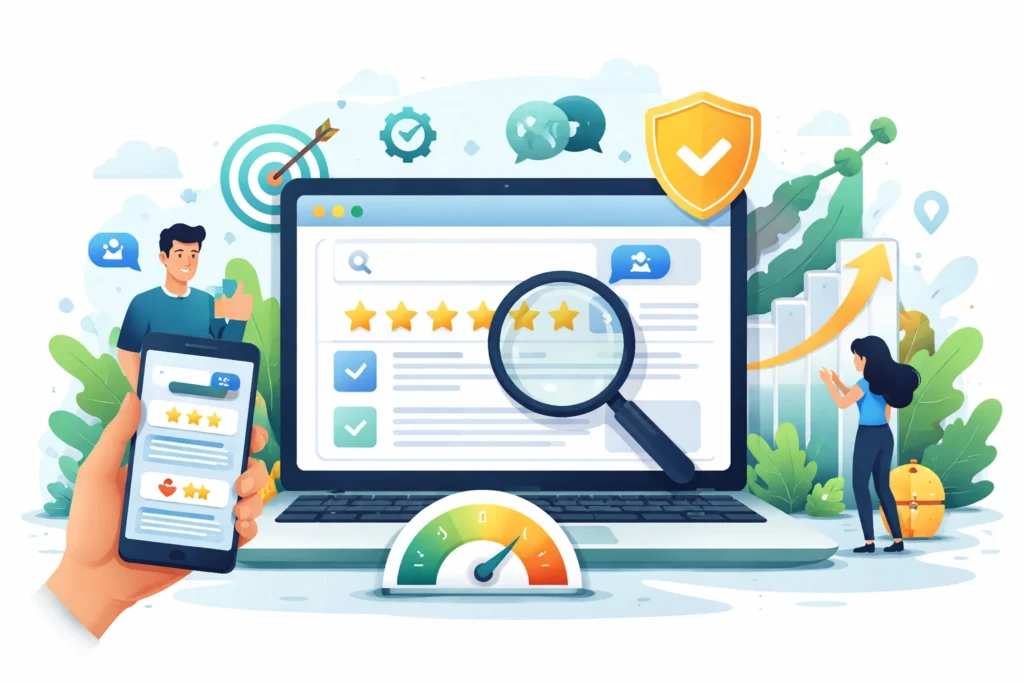
Search engines no longer rely only on keywords to rank pages. Instead, they track how users interact with a site after clicking through. And when visitors stay longer and return often, it shows the content delivers genuine value.
Here’s how you can encourage that behavior:
- Higher Wait Time: Sites where users spend 3-4 minutes reading an article (instead of bouncing after 15 seconds) demonstrate that the content genuinely answered their query. It also keeps their attention longer.
- Lower Bounce Rates: If someone searches for “SEO strategies,” lands on your page, and visits multiple pages, it shows your content meets their needs. But pages where most leave immediately send the opposite signal.
- Return Visitor Patterns: Regular visitors coming back show your site is a trusted resource. They save and revisit it instead of using it once and forgetting.
These engagement metrics work together to reinforce the trust signals we discussed earlier. Strong user experience validates that your site deserves its rankings.
How Google Evaluates Website Credibility
Google doesn’t take your word for it when your site claims to be trustworthy. But the algorithm does use content quality and technical health to decide if your site ranks high or falls to page five.
So let’s break down exactly what Google looks for when evaluating whether your site is worth trusting.
E-E-A-T and Its Role in SEO Performance
E-E-A-T stands for Experience, Expertise, Authoritativeness, and Trustworthiness. These four factors help Google decide if your content comes from a credible source and deserves a high ranking.
Basically, Google wants to serve content from people who actually know what they’re talking about. For example, a financial article by a certified planner with 15 years of experience will outrank generic tips from an anonymous blogger (even if the writing styles are similar).
Technical Signals That Build Search Engine Confidence
Search engines check technical factors like site speed, mobile friendliness, and structured data to see if a site is well-maintained. That’s why sites with strong technical setups outperform those with backend issues, even if the content is similar.
For instance, a one-second delay in page load can reduce conversions in retail by 20%, which shows how performance affects both user satisfaction and business results. Sites that load quickly, work on all devices, and include structured markup signal professionalism and show that you value user experience.
The Role of Content Quality in SEO Success

Many pages feel incomplete, outdated, or copied, causing visitors to hit the back button quickly. Google notices that behavior.
If your visitors leave within seconds, it signals that your content may not deserve its ranking. This sets off a cycle: poor content leads to low engagement, which lowers rankings and reduces visibility over time.
Here’s what separates trusted sites from the ones stuck on page three.
Creating Accurate and Well-Researched Information
Publishing well-researched content with citations and expert input makes your site a trusted resource. This leads to higher rankings and more qualified visitors who are likely to convert.
Take for instance, a health site that uses peer-reviewed studies, quotes from credentialed physicians, and links to trusted databases. It will naturally perform better than generic wellness blogs sharing common advice.
Google rewards this depth because user behavior confirms it: people spend more time on well-sourced articles and return for similar information.
The Impact of Outdated or Misleading Content
Google’s algorithms have become remarkably good at detecting content that no longer reflects current information or contradicts established facts. But this means keeping even a handful of outdated articles can lower the overall trustworthiness of your site.
That’s why sites that regularly review and update old content often see ranking improvements because fresh content shows active editorial care.
How Backlinks Function as Trust Votes
Backlinks are links from other websites to yours, which act as endorsements that show search engines your content is valuable. Across hundreds of projects, we’ve seen that high-quality backlinks remain one of the strongest trust signals, even as algorithms have changed in many other ways.
So when a respected industry publication links to your guide or a university cites your research, it acts like an academic citation, validating your work.
For example, editorial links (as mentioned in a respected industry blog) show that your content is valuable enough to share. But if your site has links from a variety of sources, it signals authority across multiple topics.
Also, patterns where links use varied, context-driven phrases rather than repeating the same keyword show natural anchor text and signal genuine endorsement.
Now, not all backlinks carry the same value. As we covered, a link from a government or major news site is much more valuable than several links from new, low-quality blogs. Search engines look at the full network of site relationships to decide which links are genuine endorsements and which are attempts to manipulate rankings.
Transparency and Security in Modern SEO

Search engines treat transparency and security as non-negotiable baseline requirements. This means every missing privacy policy or insecure connection actively hurts your rankings (even if everything else about your site seems polished).
Let’s be real here: would you enter your credit card information on a site without HTTPS, or trust a company that hides basic contact details? We’re guessing it’s a hard no, and neither would your visitors.
Just by implementing HTTPS encryption and clear privacy policies, you increase user trust, lower bounce rates, and meet Google’s security standards for better rankings. This is especially important today, where 84% of users would abandon a purchase if their data were sent over an insecure connection.
See how your security directly impacts conversion rates and search performance? Once your e-commerce site switches from HTTP to HTTPS, it’ll see immediate improvements in both user trust metrics and organic visibility.
Create Credible, User-Focused SEO Strategies
So, does this approach to trust-building feel more actionable than the typical SEO advice you’ve seen before?
Remember that trust-building in SEO means creating credible, secure, and user-focused experiences that satisfy both search engines and visitors. This approach drives long-term organic growth that builds over time. We can tell you from experience that it will outperform any short-term tricks you’ve tested before, as it aligns with how search engines truly evaluate quality.
If you need help putting these strategies into practice, Studio Paralelo can guide you. We can help you build the kind of trust that translates into lasting rankings and real business growth.